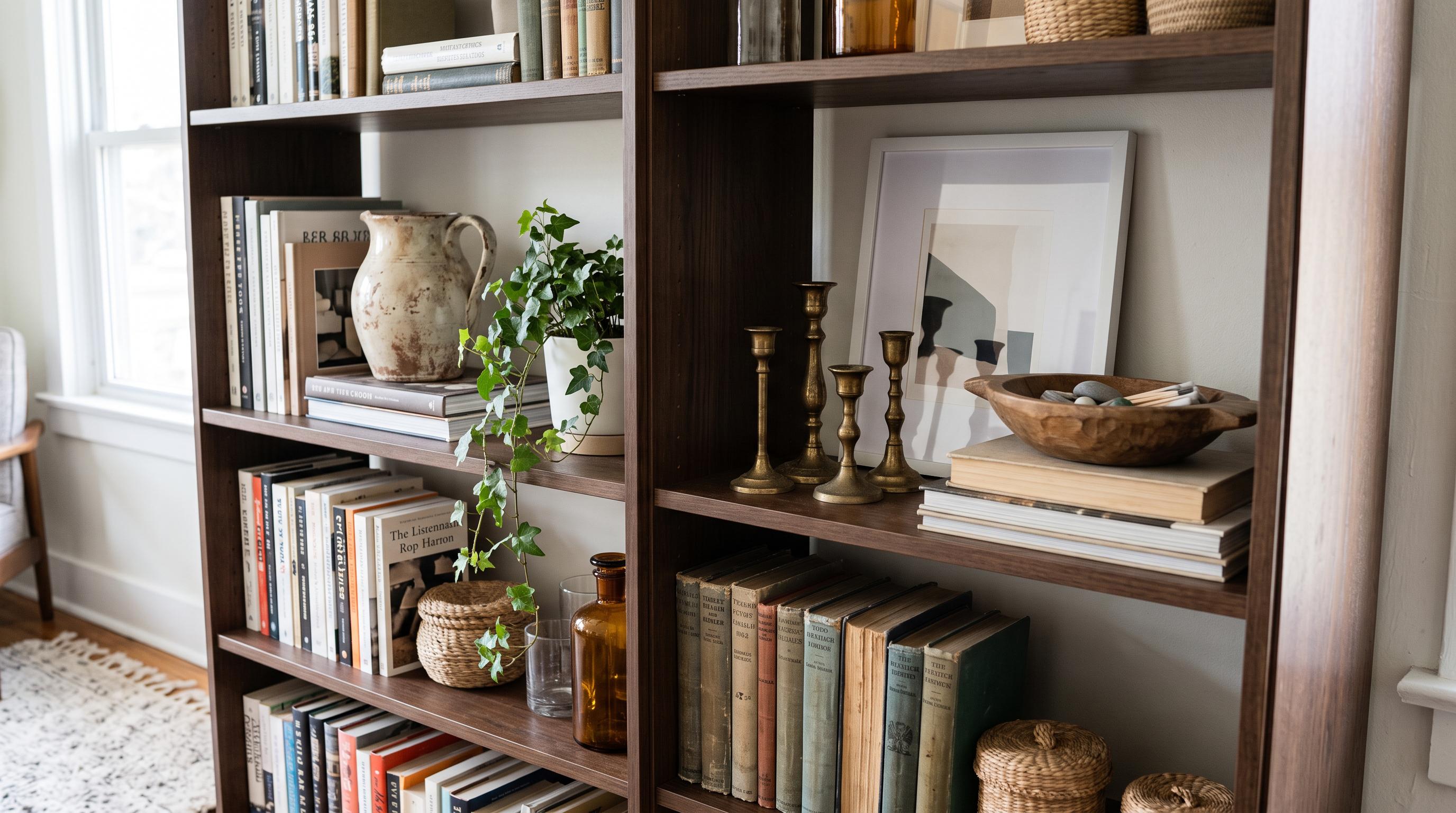
Walk into a home where everything was bought in a single afternoon from the same big-box catalog, and it often feels like a showroom: pristine, coordinated, and oddly flat. Walk into a room anchored by a hand-carved mid-century walnut stool, a patinated brass bowl holding everyday keys, and a gently worn ceramic pitcher filled with market greens, and the room exhales.Vintage pieces do something contemporary mass production simply cannot: they bring soul, texture, and an irreplaceable sense of history into a space.Yet, one of the most common worries we hear from design enthusiasts is the fear of going too far—the dreaded "antique shop attic" effect. The good news? You don’t need to live in a period-accurate museum to enjoy vintage. The magic lives in the friction between old and new.Here is our practical guide to curating and styling vintage goods in a contemporary home.
1. Embrace the 80/20 Rule
If your base is contemporary—clean architectural lines, neutral walls, modern upholstery—vintage pieces act as sculptural focal points. A reliable formula is to aim for roughly 80% contemporary foundation and 20% vintage accents (or vice versa, if you live in a historic home).A sleek, low-profile sofa feels grounded when flanked by a pair of 1970s travertine side tables. A sharp kitchen island of polished quartz instantly softens beneath an oversized French stoneware crock holding wooden utensils. The contrast highlights the beauty of both eras.
2. Follow the Patina (Imperfections Are the Point)
In a world of flawless plastic laminates and veneer, authentic wear is a luxury. When sourcing vintage home goods, look for:
- Unlacquered metals: Aged brass, copper, and pewter with natural tarnish that catches ambient light.
- Turned wood and burl: Dents, grain variations, and softened edges that tell the story of decades of hands.
- Handmade ceramics: Uneven glazes, crazing, and organic shapes that contrast beautifully against modern floating shelves.
These textural quirks aren't flaws—they are character markers that make an object visually grounded.
3. Seek Utility Before Novelty
The easiest way to make vintage decor feel effortless rather than clutter-heavy is to give every piece a job.
- Swap a standard wire fruit basket for a pedestal footed stoneware bowl.
- Use a heavy brass hotel key tray to corral bedside essentials or perfumes.
- Repurpose an antique linen runner or hand-loomed grain sack as a casual throw or wall hanging.
- Keep matches in a petite mid-century glass ashtray next to your favorite candle.
When vintage items serve a daily purpose, they blend seamlessly into your routine instead of sitting untouchable on a shelf.
4. Play with Scale and Negative Space
Vintage objects often have intricate silhouettes or heavy visual weight. To prevent a room from feeling crowded, give your finds breathing room.Instead of clustering a dozen small knick-knacks across a console table, choose one striking, oversized element—like a large amber glass demijohn or a substantial carved stone vessel—and balance it with negative space and a clean, modern lamp. Let the piece command the surface.
Curating a Home Takes Time
A collected home isn't assembled overnight, and that is precisely its charm. It is the result of patience, curiosity, and pieces found along the way that sparked a reaction.Whether you’re hunting for your first sculptural mid-century vase or hunting down the perfect weathered ironstone dish, remember that homes should feel gathered, not staged.What era or material are you currently drawn to—mid-century teak, rustic stoneware, or ornate brass? Let me know so we can tailor the next post or collection spotlight around it.